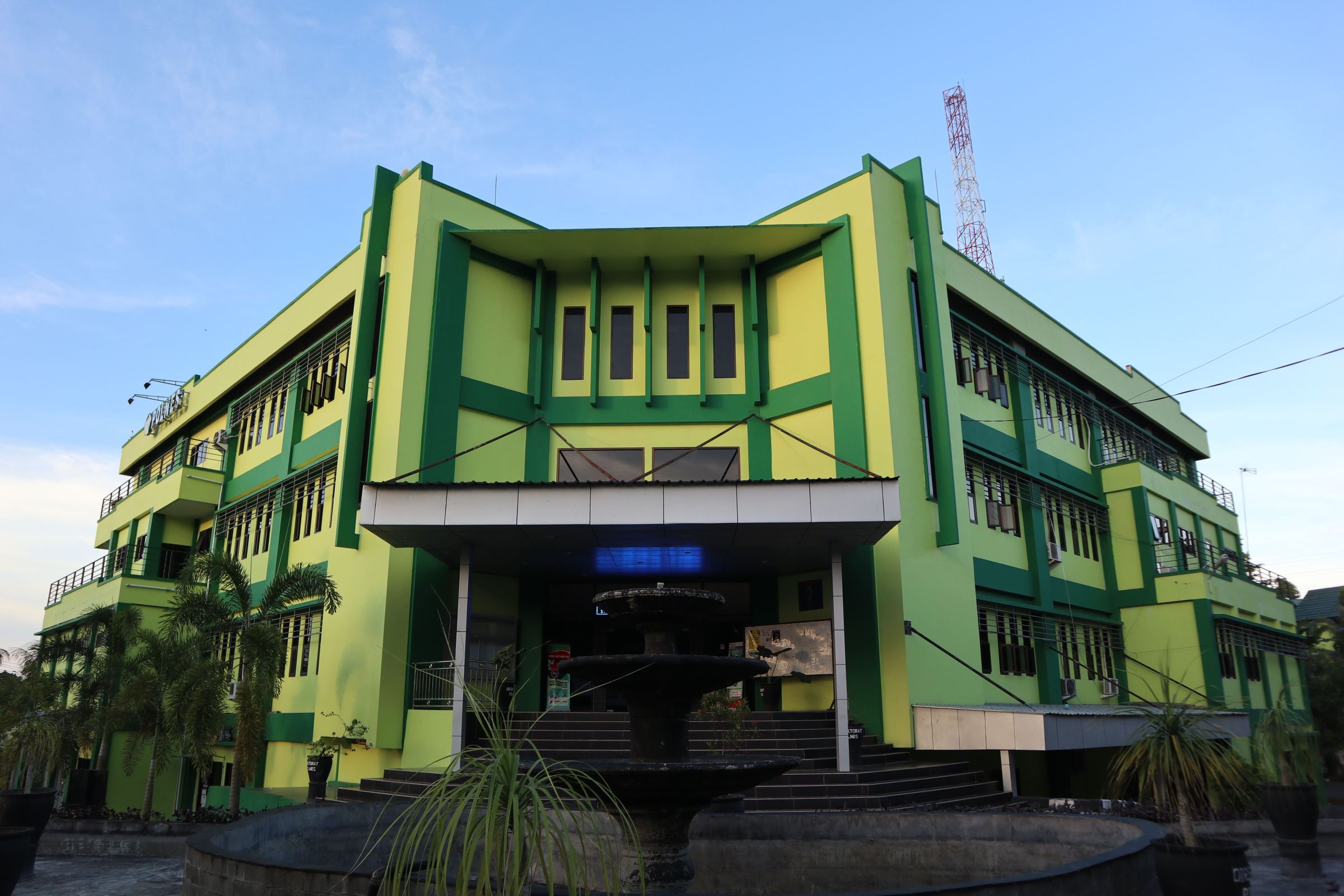
Environmental and Social Safeguard Studies for the Integrated Laboratory and Integrated Workshop Buildings, Politeknik Negeri Samarinda
- Client
- Politeknik Negeri Samarinda
- Location
- Samarinda, Kalimantan Timur, Indonesia
- Status
- Ongoing
- Period
- 2026 — Present
Project Overview
Politeknik Negeri Samarinda is developing two new facilities within its Gunung Panjang campus in Samarinda Seberang, East Kalimantan: an eight-storey Integrated Laboratory Building and a five-storey Integrated Workshop Building, located roughly 100 metres apart and built in parallel. The programme also involves demolishing eight existing buildings of about 36 years of age. The development is financed through the Asian Infrastructure Investment Bank under the PIGreen programme, and therefore has to satisfy both Indonesian environmental law and the AIIB Environmental and Social Framework.
Our team was engaged to prepare the full environmental and social document package required for environmental approval and financing readiness, delivered as one coordinated body of work so that baseline data and findings stay consistent across every document.
Scope of Work
ESIA and ESMP (AIIB ESF/ESS1) — project and area-of-influence description across demolition, construction and operation; legal gap analysis between Indonesian regulation and the AIIB ESF; screening and scoping; alternatives analysis; biophysical and socio-economic baseline; impact and risk assessment covering cumulative effects, climate mitigation and CRVA, occupational and community health and safety, labour conditions and vulnerable groups; management plan with monitoring programme, institutional arrangements and cost estimate.
Land Acquisition and Resettlement Due Diligence (ESS2) — integrated within the ESIA, covering land tenure history and field verification that no informal land users, tenants or street vendors are present within the fenced campus footprint.
AMDAL (Government Regulation 22/2021) — document screening with the environmental authority, full primary baseline survey with KAN-accredited laboratory testing, and preparation of the Terms of Reference Form, ANDAL and RKL-RPL.
Technical Approval for Wastewater Quality Standards (Pertek BMAL) — inventory of domestic, laboratory and workshop effluent sources, water balance, treatment system design review including pre-treatment for laboratory streams, and compliance point determination.
Technical Approval for Emission Quality Standards (Pertek BMUE) — inventory of stationary emission sources including standby generators, mass balance and stack review, emission control and monitoring plan.
Technical Details for Hazardous Waste Storage (Rintek TPS LB3) — characterisation of laboratory and workshop chemical waste, e-waste and contaminated demolition waste, generation rates, and storage facility specification.
Traffic Impact Analysis (ANDALALIN) — traffic counts, speed and road geometry surveys, trip generation modelling across demolition, construction and operational phases, and recommendations on access, parking and internal campus circulation.
Spatial Suitability Permit (KKPR) support — tracing the existing permit status, preparing site polygons and a conformity review against the Samarinda spatial plan, and shepherding the application through OSS-RBA.
Technical Highlights
Asbestos-containing material screening across all eight buildings slated for demolition, with a corresponding handling and disposal plan.
Laboratory and workshop risk deep-dive covering chemical handling and storage, research safety, emergency preparedness and hazardous waste streams.
Impact modelling for air dispersion, noise and vibration, and drainage and hydrology.
Safety of a live campus — dust, noise and vibration management for demolition and parallel construction while teaching activities continue.
Meaningful public engagement and information disclosure, including dedicated sessions with women and vulnerable groups, supported by a Stakeholder Engagement Plan and a project-level Grievance Redress Mechanism.
Bilingual delivery in Indonesian and English to meet AIIB review requirements.
Deliverables
ESIA-ESMP with integrated SEP, GRM and LARDD; AMDAL package (Terms of Reference Form, ANDAL, RKL-RPL); Pertek BMAL; Pertek BMUE; Rintek TPS LB3; ANDALALIN; and the KKPR status report with supporting application documents.
Capabilities this work demonstrates
Related projects
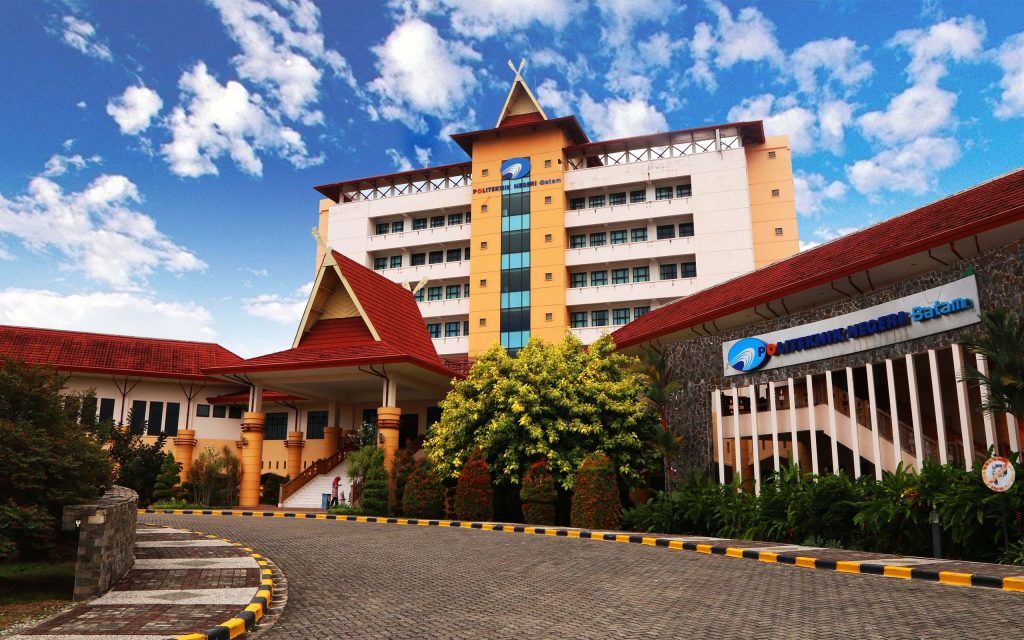
ESIA-ESMP for the Technovation Tower and Hub (TECXSA), Politeknik Negeri Batam
2026 · Politeknik Negeri Batam · Indonesia

Environmental and Social Impact Assessment (ESIA) & Environmental Management Planning Consultancy - RSJ Dr. Radjiman Wediodiningrat
2026 · RSJ Dr. Radjiman Wediodiningrat Kemenkes - AIIB · Indonesia

Environmental and Social Impact Assessment (ESIA) & Environmental Management Planning Consultancy - RSUP Dr. Sitanala
2026 · RSUP Dr. Sitanala - Kemenkes - AIIB · Indonesia
Interested in a Similar Project?
Talk with our experts about solutions tailored to your project.